Pipeline Infrastructure in Iraq
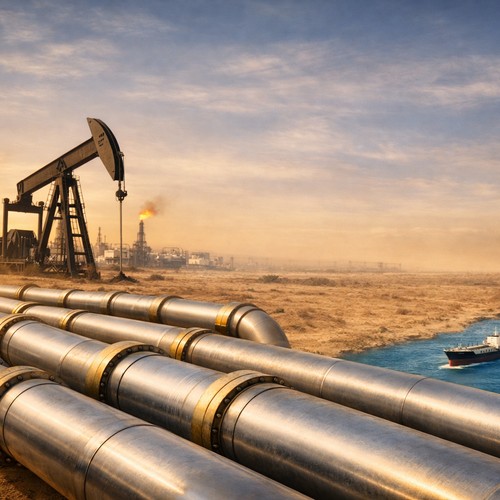
As regional dynamics continue to evolve, Iraq is increasingly positioned to enhance its role as a key energy exporter. One of the most promising developments lies in the expansion and modernization of oil export pipeline infrastructure, offering new opportunities for efficiency, diversification, and long-term growth.
Strategic Importance of Pipeline Exports
Pipeline transportation remains one of the most cost-effective and reliable methods for exporting crude oil. For Iraq, strengthening pipeline networks reduces reliance on limited export routes and enhances flexibility in accessing global markets.
By expanding pipeline capacity, Iraq can:
Increase export volumes
Reduce transportation costs
Improve supply stability to international partners
Key Pipeline Projects and Developments
1. Basra–Aqaba Pipeline (Iraq–Jordan)
One of the most significant strategic projects is the Basra–Aqaba pipeline, designed to connect southern Iraqi oil fields to the Jordanian Red Sea port of Aqaba.
Estimated length: approximately 1,700 km
Planned capacity: up to 1 million barrels per day
Strategic goal: provide a direct export route that bypasses the Gulf
This project is particularly important as it allows Iraq to access global markets through the Red Sea, reducing dependency on traditional maritime routes.
2. Kirkuk–Ceyhan Pipeline (Iraq–Turkey)
The Kirkuk–Ceyhan pipeline remains one of Iraq’s most important export routes to Europe.
Connects northern Iraqi fields to Turkey’s Mediterranean port of Ceyhan
Length: approximately 970 km
Designed capacity: up to 1.4–1.6 million barrels per day
Recent efforts to rehabilitate and restart sections of the pipeline highlight Iraq’s commitment to restoring export capacity and strengthening its northern routes.
3. Basra–Haditha Pipeline (Internal Strategic Link)
The Iraqi government has also approved the Basra–Haditha pipeline, which is aimed at strengthening internal connectivity and supporting export diversification.
Approved as part of Iraq’s national infrastructure strategy
Designed to improve oil transport from southern to central regions
Supports alternative export routes in times of regional disruption
4. Revival of the Kirkuk–Baniyas Pipeline (Iraq–Syria)
Discussions have also taken place regarding the revival of the historic Kirkuk–Baniyas pipeline, which previously connected Iraq to the Syrian Mediterranean coast.
Originally constructed in the 1950s
Potential to reopen an additional export corridor to the Mediterranean
Although still under consideration, this project reflects Iraq’s broader strategy of diversifying export routes.
Diversification of Export Routes
Developing additional pipeline routes whether through regional connections or rehabilitation of existing infrastructure can significantly enhance Iraq’s export capabilities.
Diversification helps:
Mitigate geopolitical and logistical risks
Ensure continuity of supply
Strengthen trade relationships with neighboring countries
This creates a more resilient export framework, even during periods of regional uncertainty.
Investment Opportunities in Infrastructure
The expansion of pipeline networks presents substantial opportunities for both local and foreign investors. Key areas of investment include:
Construction and rehabilitation of pipelines
Operation and maintenance services
Engineering and technical consulting
Financing and public-private partnerships (PPPs)
Such projects are often supported by long-term government strategies, making them attractive for investors seeking stable returns.
Regulatory and Legal Considerations
Pipeline projects in Iraq are governed by a framework that involves multiple authorities and compliance requirements. Key considerations include:
Licensing and approvals from relevant ministries
Land use and right-of-way agreements
Environmental and safety regulations
Contract structuring and risk allocation
Engaging experienced legal counsel is essential to navigate these requirements and ensure project success.
Regional and Global Market Impact
Enhanced pipeline infrastructure not only benefits Iraq but also contributes to regional energy security. By improving export efficiency, Iraq strengthens its position as a reliable supplier in global energy markets.
This, in turn, reinforces long-term commercial partnerships and supports economic growth.
Conclusion
The development of oil export pipelines represents a significant opportunity for Iraq to expand its energy sector and attract strategic investment. With the right legal, technical, and financial frameworks in place, pipeline infrastructure can serve as a cornerstone for sustainable growth and market integration.
Our firm provides comprehensive legal support for energy and infrastructure projects in Iraq, including regulatory advisory, contract drafting, and investment structuring, ensuring clients can confidently participate in this evolving sector.