Iraq's Fintech Law
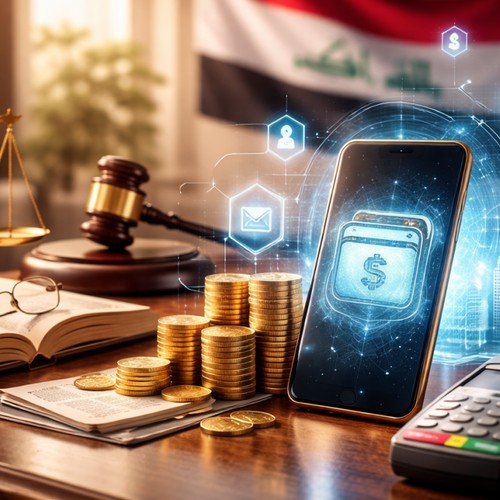
Legal Foundations and Economic Implications
In recent years, Iraq has taken gradual but notable steps toward regulating the financial technology (fintech) sector, reflecting broader efforts to modernize the financial system and support economic formalization. The emergence of fintech-related regulations marks an important development in Iraqi financial law, with implications for banks, payment service providers, investors, and consumers.
While Iraq does not yet have a single, comprehensive “Fintech Law” in the traditional sense, the legal framework governing fintech activities has been developing through regulations, instructions, and supervisory decisions issued primarily by the Central Bank of Iraq (CBI). These measures collectively form the legal backbone of Iraq’s fintech environment.
1. Background and Rationale for Fintech Regulation
The move toward fintech regulation in Iraq has been driven by several economic and institutional considerations, including:
A high reliance on cash-based transactions
The need to improve financial inclusion
Efforts to enhance transparency and reduce informal economic activity
The modernization of banking and payment systems
Fintech regulation is increasingly viewed as a tool to support economic efficiency and trust in financial transactions, rather than merely a technological development.
2. Regulatory Authority and Legal Structure
The Central Bank of Iraq plays a central role in regulating fintech-related activities. Through licensing requirements, operational standards, and compliance rules, the CBI oversees:
Electronic payment service providers
Mobile payment platforms
Digital wallets and prepaid instruments
Fintech solutions linked to banking services
These regulations are issued under the CBI’s statutory authority to supervise the banking and financial sector, ensuring monetary stability and consumer protection.
Rather than replacing existing banking laws, fintech regulations operate in coordination with traditional financial legislation, including banking, anti-money laundering, and consumer protection laws.
3. Licensing and Compliance Requirements
A key element of Iraq’s fintech framework is the licensing system for electronic payment and financial service providers. Companies operating in this sector are required to:
Obtain formal authorization from the CBI
Meet capital adequacy and technical requirements
Implement robust governance and internal control systems
Comply with reporting and audit obligations
These requirements aim to ensure that fintech operators maintain financial stability and operational reliability, contributing to confidence in digital financial services.
4. Anti-Money Laundering and Consumer Protection
Fintech entities in Iraq are subject to anti-money laundering (AML) and counter-terrorism financing (CTF) obligations. This includes customer due diligence, transaction monitoring, and cooperation with regulatory authorities.
From a legal perspective, these obligations align fintech operations with international compliance standards while safeguarding the integrity of Iraq’s financial system. At the same time, consumer protection rules emphasize:
Data security
Transparency in fees and services
Clear contractual relationships between providers and users
This dual focus reflects a balanced approach that supports innovation while maintaining legal safeguards.
5. Economic Impact and Market Development
The regulated expansion of fintech services is expected to contribute positively to Iraq’s economy by:
Reducing dependence on cash transactions
Improving access to financial services for underserved populations
Supporting small and medium-sized enterprises (SMEs)
Enhancing efficiency in government and private-sector payments
From a legal standpoint, fintech regulation supports economic formalization, enabling transactions to move into a monitored and documented financial environment.
6. Opportunities for Investors and Legal Practitioners
Iraq’s evolving fintech framework presents opportunities for:
Local and foreign investors seeking entry into the digital finance market
Banks partnering with fintech companies
Legal professionals advising on licensing, compliance, and regulatory risk
As the sector develops, legal advisory services will play a key role in helping businesses navigate regulatory requirements and align operations with Iraqi financial law.
7. Challenges and Future Outlook
Despite progress, challenges remain, including:
The need for continued regulatory clarity
Capacity building within financial institutions
Public awareness and trust in digital financial services
However, the current trajectory suggests that Iraq’s fintech framework will continue to mature. Incremental legal reforms and regulatory updates are likely to strengthen the sector and enhance its role in economic development.
Conclusion
Iraq’s fintech legal framework represents a measured and forward-looking approach to financial modernization. By combining regulatory oversight with gradual market expansion, Iraq is laying the groundwork for a more inclusive and efficient financial system.
For legal professionals, fintech law has become an increasingly relevant field, intersecting with banking regulation, compliance, investment law, and economic policy. As the regulatory environment continues to evolve, fintech is expected to play a constructive role in supporting Iraq’s broader economic and financial objectives.
for further information Contact Us.